ラベル English の投稿を表示しています。 すべての投稿を表示

2015年3月7日土曜日

Are we not forgetting to talk about freedom?

Pineville Junior teacher sues over Common Core post


In the pursuit of "national security," we forget to talk about freedom. In the pursuit of "global standards," we do not talk about academic freedom. And while watching the Obama administration abuse The Espionage Act to criminalize whistleblowers who leak information regarding the Government's unconstitutional activities, we forget that the United States of America was actually founded on speaking out. What's the use of education, if not for cultivating a capacity to speak truth to power? And, is such education possible when teachers are deprived of the very freedom?

2015年2月25日水曜日

Zygmunt Bauman on questions


“Not asking certain questions is pregnant with more dangers than failing to answer the questions already on the official agenda; while asking the wrong kind of questions all too often helps to avert eyes from the truly important issues. The price of silence is paid in the hard currency of human suffering. Asking the right question makes, after all, all the difference between fate and destination, drifting and travelling. Questioning the ostensibly unquestionable premises of our way of life is arguably the most urgent of the services we owe our fellow humans and ourselves.” - Zygmunt Bauman

2015年2月2日月曜日

Kenji's prayer: The words that the beheaded Japanese journalist left behind.


"Close your eyes, and stay patient.

It's over once you get angry, and lose it.

It is close to a prayer.

Hatred is not our karma;

Judgment belongs to the realm of the gods.

They were my Arab brothers who taught me that."


So read a past tweet by the beheaded Japanese journalist, Kenji Goto. 
I am sending my love to Kenji's loved ones, my foreign friends, and especially our Muslim brothers and sisters around the world who send their prayers to his family and people in Japan. 


「イスラム国」に殺害された後藤さんの過去のツイートが注目を集めている。


「目を閉じて、じっと我慢。

怒ったら、怒鳴ったら、終わり。

それは祈りに近い。

憎むは人の業にあらず、裁きは神の領域。

そう教えてくれたのはアラブの兄弟たちだった。」

2014年8月10日日曜日

A lesson from the world’s oldest surviving wooden structure in Japan


One of the things that my home country, Japan, prides itself is having the world's oldest surviving wooden structure, Horyuji (Horyu Temple). It was built more than 1,300 years ago, during the Asuka Period (beginning of A.D. 8th century). It stands beautifully even today, thanks to generations of craftsmen who have passed on the wisdom and skills to honor and maximize the life of the trees.

To me, the strongest critique against today’s test-driven, standards-based ed “reform” comes from the simple words of such a craftsman:

Of all the materials used for these buildings, there is nothing that is standardized. There is nothing that is identical, not even among the one thousand square bearing blocks, or posts that are lined up. Taking a closer look, you’ll see that each one is uneven. Each was made by craftsmen with heart and soul. You see how beautifully they stand in that nature. There is a harmony despite the unevenness. You cannot achieve such beauty with standardized, all-identical materials. It’s good precisely because they are uneven. Human beings are the same. Because there is nothing in the nature that is identical, it is our wisdom that finds ways to harmonize them. [1]

Each child is different.
Nature reminds us to live, 
and live beautifully. 


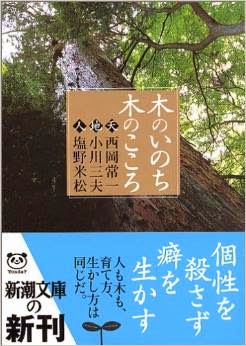
[1] 『木のいのち 木のこころ』 新潮文庫 p. 82

Original passage in Japanese (English translation by Daiyu Suzuki)

「これらの建物[法隆寺や薬師寺]の各部材には、どこにも規格にはまったものはありませんのや。千個もある斗にしても、並んだ柱にしても同じものは一本もありませんのや。よく見ましたら、それぞれが不揃いなのがわかりまっせ。どれもみんな職人が精魂を込めて造ったものです。それがあの自然のなかに美しく建ってまっしゃろ。不揃いながら調和が取れてますのや。すべてを規格品で、みんな同じものが並んでもこの美しさはできませんで。不揃いやからいいんです。
 人間も同じです。自然には一つとして同じものがないんですから、それを調和させていくのがわれわれの知恵です。」


2014年6月8日日曜日

Maxine Greene: "There are no final words, but only questions."

*This is an elaboration of the eulogy I shared at Maxine's funeral on June 5, 2014.


I first came across Maxine’s work in 1996, when I was at Colgate University, I read her Dialectic of Freedom in a class titled “Democracy and Education.” It was unlike any kind of writing that I had experienced before. It had poems, literature, films and art works…  It was like reading her life stories that weaved together all the beauties that have touched her life with educational thought. Her writing invited me into her world, and made me think, “I know her.”

After Colgate, I stayed in the U.S. to do my masters degree and then went back to Japan to teach. I returned to the U.S. in 2008, this time to pursue a doctoral degree at Teachers College. I was surprised to learn that Maxine was still alive, and even more, that she was still teaching. Her class, Education and the Aesthetic Experience was the first class I took at TC. It took place on Tuesday afternoons, in her apartment by the Central Park. We would sit around in her living room and together discussed novels, films, art works, and connected to issues of schools and the broader sociopolitical landscape. It was wonderful, but I stayed quiet in the class, trying to take it all in, speaking up only in two occasions throughout the course.

Now, I did my master in philosophy of education and, this time, I was thinking of doing something “practical,” like education policy. So I went on to take numerous courses in education policy and law. But Maxine’s words kept coming back, haunting me like ghosts. Among them were “The most important questions are those without answers,” and “Philosophy is something that we do.”

So I began to write emails and engage in conversations with her. She began to invite me to her apartment for conversations. And, eventually, she invited me to be her teaching assistant.

When I became her TA, it all began to make sense why she wrote the way she did. In the middle of the conversation, she would suddenly look outside and be marveled by one particular tree outside her dining window. She would say, “Oh, look at the tree. Look at the curves and braches. How wonderful.” Or, she would be entertained by the double-decker bus that pulled outside of her window and say, “My audience has arrived!” She was the most easily fascinated person that I have ever met.

Also, at one point, I saw how she made an outline of her writing. You see, my understanding of outlining was, “Here are the points I would like to make. One, two, three, and here is the conclusion.” But hers was like, “OK, Camus’s Plague, Picasso’s “Guernica,” “Integrity” by Adrianne Rich, and, yes, Tony Morrison’s Bluest Eyes…” That was how she outlined her thoughts. 

It all made sense.

Another thing I can share with you is Maxine’s final years in the classroom. Constantly fighting the curse of being an existentialist—never satisfied, never meaningful enough, creative enough—Maxine taught to the very end. She only missed two classes this semester, including the final class, when she became sick. I remember how, that day in the class, there was a strange sense of shared responsibility and determination—that we can do this without her, we will make her proud. We took it as if Maxine was preparing us for her departure.

In her final years, she would only speak in a couple of occasions during each class, largely because it was becoming increasingly difficult for her to follow large-group discussions. Yet, it was fascinating to see how students would cling onto those few words she would speak, taking notes, nodding, trying to take it all in. It made me realize how, at this point in her life, she was teaching with her presence.

That Maxine came to the class in her wheelchair even on a snowy day,
that she engaged in conversations with them,
that she resonated with what they said,
that she appreciated them coming back to her class every week,
that she emphasized again and again the significance of questions rather than answers,
that she dedicated her life to the search of education for freedom,
will, no doubt, have lasting impact on so many of them.

I remember how, at the end of one class this spring, I asked her for final words because she hadn’t spoken much. She said,

"There are no final words, but only questions."

That's how I will forever remember Maxine.

I’m reminded of how she expressed her hopes in her Dialectic of Freedom:

“My hope is to reawaken concern for and belief in a humane framework for the kinds of education required in a technological society. It is to recall those who read to some lost spontaneity, some forgotten hunger for becoming different, becoming new. My hope is to remind people of what it means to be alive among others, to achieve freedom in dialogue with others for the sake of personal fulfillment and the emergence of a democracy dedicated to life and decency” (1988. p. xii)


Maxine once told me: “I don’t want to save the world. I only want to start a conversation.”

   That, she certainly did.


Daiyu Suzuki
June 5, 2014.


2014年5月18日日曜日

Civil Disobedience and a Refusal to Become Neoliberal Agents

 Photo by Ava M. Capote


Many thoughts went through my mind as I prepared my speech at Taking Back Our Schools Rally on May 17, 2014. What is expected of me? What do I want to do? How best can I contribute? In the end, I decided to talk about what has been on my mind a lot lately: civil disobedience. This is largely due to my learning with Daniel Friedrich this spring and an introduction to the ideas developed by a French philosopher, Michel Foucault.

The real question for Foucault is not so much about what is wrong with the current neoliberal policies but how the influences of neoliberalism have come to dominate the ways we live and think. 

How have we come to allow such a significant change to take place? 

How is it that we have allowed corporate leaders to dictate our children’s education?

Foucault makes me realize how it was us, the constituents of the society, who have come to accept the terms and conditions of neoliberalism and govern our own activities accordingly. The “small government” of neoliberalism is made possible because we, who have unknowingly become the very agents of the neoliberal regime, actively sustain it by internalizing its values and demands.
 

-----------------

Civil Disobedience and a Refusal to Become Neoliberal Agents
by Daiyu Suzuki


Hello. One thing I want to tell you is that you guys look beautiful!!
You remind me of a beautiful quote from the Wisconsin Uprising in 2011:

What does democracy look like?
This is what democracy looks like!!

Politics belong to the streets, not the capitol.

Anyway, my name is Daiyu Suzuki, and I am many things.
Among them, I was born and grew up in Japan. I was a public junior high school teacher there as well, for six and half years. I am also a father of two daughters, who attend a NYC public school. At the same time, I am a doctoral student of education, and am a co-founder of an education activist network called Edu4.

Today, I would like to talk about the possibilities and meanings of civil disobedience. I think this is particularly pertinent to this rally because we have here with us various educational constituent groups who have engaged in different forms of civil disobedience such as opt out parents and teachers who have refused to administer testing. A favorite journalist of mine named Chris Hedges has once said that, unfortunately, there is no political mechanism left in the United States to combat the power elite, except for civil disobedience.

Now, many people may dismiss civil disobedience as something insignificant or something that is not powerful enough. Others may want to burn the buildings instead. However, civil disobedience may look very different if we see it as an active rejection of our own identities imposed by neoliberalism and our refusal to become the agents of neoliberalism.

What if we start questioning the identities imposed upon us and what we are expected to do?

Parents! I am a parent, too. As educational consumers, we are expected to “choose” the best schools for our children. But what if we question why we need to choose and refuse to do so?

As educational consumers, we are expected to compete with other families by supporting our children to do better on tests. What if we refuse to compete and tell our children not to take tests? What if we tell our children to care and collaborate with others so that no child would be left behind?

As tax-payers, we are expected to hold our schools and teachers “accountable” for what we pay. What if we refuse to be relegated to tax-payers but as citizens hold our political leaders accountable for supporting, not getting in the way of, teachers to teach as true professionals?

Teachers! I was a teacher, too. As educational service providers, we are expected to meet the needs of our customers and raise their test scores so that they will be college- and market-ready. What if we, as educators, refuse to test them but instead teach them, not so that our students will be college-ready or market-ready but democracy-ready to address the sufferings and injustices of this common world?

Students! I am a student, too. As the future work force of the United States, we are expected to compete with students from other countries and be successful entrepreneurs. But what if we, as the next generation and the learners of life, demand happiness and imaginative capacities as the goal of our education?

What if we refuse to become “self-responsible customers” in the education market and call it out loud that there is something terribly wrong when our federal government is making $41.3 billion profit off the student loan? That quality education should not be a choice but our fundamental human right?

What if we say “ENOUGH!” and refuse to become the agents of neoliberalism?

What if?


*This is an elaboration of the speech I gave. 
You can watch the actual speech below (Courtesy of Mert Melfa).